
The Fine Line Between Managing People and Leading Them
By Ilhiana Rojas Saldana • May 10, 2026

There comes a point in many leadership journeys where the skills and practices that once created success no longer feel fully sufficient for what the role now requires.
Early in our careers, we are often recognized for our ability to execute. We learn how to solve problems quickly, manage competing priorities, deliver under pressure, and keep things moving forward when complexity increases. We become the person others rely on because we know how to organize the work, navigate challenges, and produce results.
And for a long time, those capabilities create momentum.
They build credibility. Visibility. Trust. Growth.
But eventually, leadership begins asking something different from us. Not just to manage the work, but to lead the people behind it. And that shift is where many leaders begin to feel tension they were never fully prepared for.
Because suddenly, success is no longer measured only by what you can accomplish. It becomes measured by how well teams align, how effectively people collaborate, how safely others communicate, how clearly priorities are understood, and how consistently performance can be sustained through uncertainty and change.
The Leadership Reality Teams Are Navigating Today
In addition, today’s workplace requires leaders to operate in ways that are far more nuanced than they were even a few years ago.
Teams are navigating constant change, competing priorities, faster decision-making cycles, economic uncertainty, evolving workplace expectations, and increasing levels of stress and burnout. At the same time, employees are looking for leaders who can create both clarity and connection — leaders who can provide direction without becoming overly controlling, and flexibility without creating confusion.
And that balance is not always easy to navigate. Because modern leadership no longer lives only in strategy, execution, or relationship-building independently.
It lives in the tension between them.
And increasingly, the leaders who create the strongest teams are not necessarily the ones who lean hardest into management or leadership alone.
They are the ones learning how to move intentionally between both.
What Managing Should Do
The reality is that managing, at its best, is not about micromanagement or control.
Strong management creates clarity.
It helps people understand expectations, priorities, responsibilities, timelines, and decision-making processes. It reduces unnecessary ambiguity. It creates consistency and follow-through. In many ways, it creates the operational stability that allows teams to perform effectively and collaborate with greater confidence.
And in today’s workplace, clarity has become one of the most undervalued forms of leadership.
Because when priorities constantly shift, communication feels inconsistent, and expectations remain unclear, teams spend enormous amounts of energy trying to interpret instead of execute.
In many organizations, some of the greatest stress employees experience today does not come only from workload.
- It comes from ambiguity.
- From unclear priorities.
- From changing expectations.
- From lack of alignment.
- From uncertainty around decision-making.
- From not fully understanding what success actually looks like.
Strong management helps reduce that noise. Not by controlling people, but by helping create focus, alignment, and consistency.
What Leadership Makes Possible
Leadership, meanwhile, helps people navigate uncertainty in a very different way.
It creates trust during moments of pressure. It connects individuals to purpose, vision, growth, and possibility. Leadership helps people feel seen, valued, and motivated to move forward together, especially when challenges arise.
It is leadership that often determines whether people feel psychologically safe enough to contribute ideas, navigate change, take initiative, or stretch beyond their comfort zone.
It is leadership that shapes culture in the moments where pressure rises, priorities compete, and emotions enter the room.
And while management helps people understand what needs to happen, leadership often influences whether people feel willing, engaged, and connected enough to move forward together.
The strongest leaders understand that teams need both experiences simultaneously.
Because while inspiration may energize a team, lack of clarity will eventually frustrate them.
And while structure may create consistency, lack of humanity will eventually disengage them.
Where Intentional Balance Actually Lives
This is where modern leadership becomes far more nuanced than many people expect.
The strongest leaders are not choosing between management and leadership. They are learning how to move fluidly between both depending on what the moment, the team, and the business actually need.
Because some moments require inspiration. Others require direction.
Some moments call for empathy and patience. Others require accountability and decisiveness.
And the leaders who navigate this balance well are often the ones who create the healthiest combination of trust, performance, clarity, and engagement over time.
Here are five shifts that often help leaders strengthen that balance more intentionally.
1. Balance Autonomy With Direction
One of the biggest leadership tensions today is knowing how much direction a team actually needs.
In environments that move quickly, leaders often shift priorities, make decisions in real time, or expect teams to adapt as conditions evolve. But when expectations, ownership, or decision-making boundaries are not consistently clarified, teams can end up spending significant energy trying to determine what matters most, what success actually looks like, or who is ultimately responsible for what.
Strong leadership requires both direction and autonomy working together.
Direction may look like clearly defining priorities, aligning on decision-making ownership, resetting expectations when priorities shift, or helping teams understand what success looks like before execution begins.
Autonomy, meanwhile, may look like creating space for independent problem-solving, encouraging teams to bring recommendations instead of waiting for answers, involving employees in decisions that impact their work, or using check-ins to support alignment rather than monitor every step.
Because autonomy works best when people have enough clarity to move with confidence.
2. Balance Empathy With Accountability
As conversations around burnout, well-being, and emotional health continue shaping the workplace, many leaders are becoming more intentional about creating supportive and human-centered environments.
At the same time, teams still need clarity around expectations, ownership, performance, and follow-through.
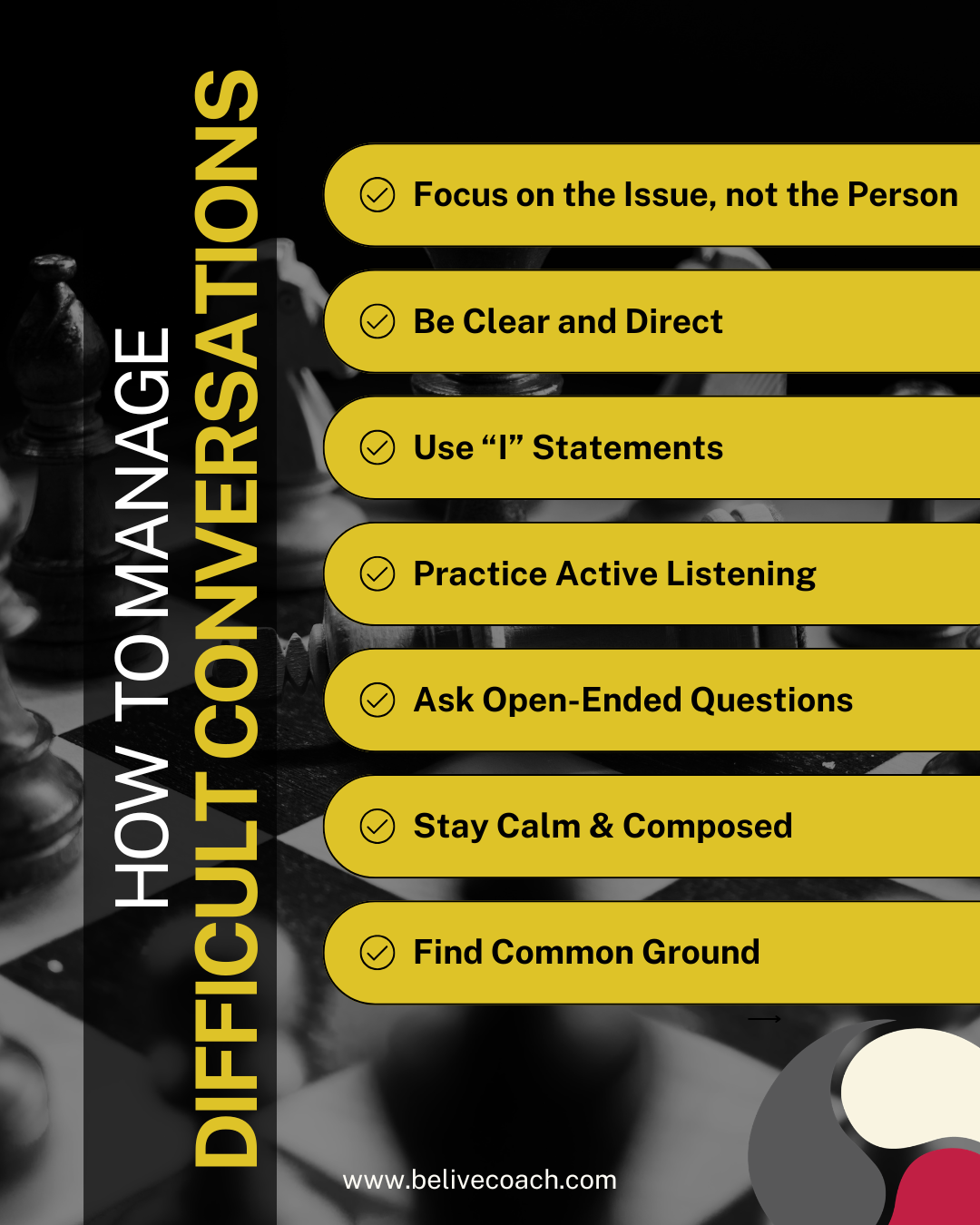
This is where leadership requires more than simply being supportive or understanding. It requires the ability to navigate difficult conversations, reinforce standards consistently, and address challenges directly while still maintaining trust and respect within the relationship.
Strong leadership requires both empathy and accountability working together.
Accountability may look like addressing performance concerns early instead of allowing frustration to build over time, clarifying expectations directly, documenting next steps and ownership clearly, reinforcing standards consistently across the team, or having difficult conversations instead of avoiding them in the name of harmony.
Empathy, meanwhile, may look like asking questions before making assumptions, creating space for honest dialogue, understanding the context behind behaviors or challenges, separating the person from the performance issue itself, and approaching feedback as a growth conversation rather than a personal criticism.
Because people generally respond best when they feel both supported and clearly guided.
And in many cases, trust is strengthened not by avoiding difficult conversations, but by handling them with clarity, consistency, and respect.
3. Balance Vision With Execution
Vision is often what energizes people.
It helps teams understand where they are going, why the work matters, and how their contributions connect to something larger than daily responsibilities. Particularly during periods of uncertainty or change, vision creates direction and possibility.
But vision alone does not sustain momentum. Teams also need consistency, prioritization, communication, and execution to translate ideas into meaningful progress.
Strong leadership requires both vision and execution working together.
Vision may look like consistently reinforcing the bigger picture, connecting daily work to broader goals, helping teams understand the “why” behind decisions, communicating future direction clearly, or creating space for innovation and new ideas.
Execution, meanwhile, may look like translating strategy into actionable priorities, clarifying timelines and ownership, following up on commitments consistently, removing barriers that slow progress, or ensuring teams understand what needs to happen next — not only where the organization hopes to go eventually.
Because while vision creates inspiration, execution is what creates trust over time.
And teams are far more likely to stay engaged when they experience both clarity around the future and consistency in the present.
4. Balance Flexibility With Structure
The modern workplace continues evolving toward greater flexibility, adaptability, and autonomy. And in many ways, that evolution has created healthier and more human-centered ways of working.
At the same time, flexibility without enough structure can quickly create confusion, inconsistency, and unnecessary stress across teams.
This is where strong leaders recognize that structure is not the opposite of trust.
In many cases, it is what helps trust operate more effectively.
Strong leadership requires both flexibility and structure working together.
Structure may look like establishing clear communication rhythms, creating visibility around priorities and timelines, defining team norms and decision-making processes, documenting ownership clearly, or reinforcing consistent expectations around collaboration and follow-through.
Flexibility, meanwhile, may look like adapting leadership approaches based on individual or team needs, allowing room for experimentation and new ideas, adjusting plans as realities evolve, focusing on outcomes instead of rigid processes, or recognizing when different situations require different approaches.
Because while flexibility creates adaptability, structure often creates the clarity and predictability that help teams operate with greater confidence.
And particularly in fast-moving environments, consistency can become one of the most stabilizing forms of leadership.
5. Balance Managing Performance With Leading People
Perhaps one of the greatest tensions in leadership today is learning how to simultaneously care deeply about people while also maintaining clarity around performance, standards, and results.
Because strong leadership requires both.
Teams want leaders who recognize their contributions, support their development, and create environments where people feel valued and respected. But teams also need leaders who can make decisions, reinforce accountability, uphold standards consistently, and help drive performance forward.
This is where leadership becomes far more nuanced than simply being “people-focused” or “results-driven.”
Strong leadership requires both performance management and people leadership working together.
Managing performance may look like setting measurable expectations, providing regular feedback, reinforcing accountability consistently across the team, identifying gaps early, recognizing high performance visibly, or helping teams stay aligned around priorities and outcomes.
Leading people, meanwhile, may look like investing in development conversations, understanding individual strengths and motivations, creating opportunities for growth, recognizing emotional dynamics within the team, fostering inclusion and trust, or helping people navigate challenges and uncertainty with greater confidence.
Because people do not thrive when they feel like numbers alone.
But organizations also do not thrive when performance expectations become unclear or inconsistent. The strongest leaders understand how to hold both realities at the same time.
The Leadership Shift
The future of leadership will not belong only to those who inspire.
Nor will it belong only to those who execute.
It will belong to leaders who know how to create clarity without losing humanity. Leaders who can reinforce accountability while still building trust. Leaders who can create structure without becoming rigid, and flexibility without creating confusion.
Because leadership and management were never meant to compete with one another.
They were always meant to work together.
And perhaps that is the real shift many leaders are navigating right now.
Not moving away from management. But elevating how they manage through stronger leadership.
As you reflect on your own leadership, it may be worth considering:
- Where might your team currently need more clarity from you?
- Where might they need greater trust or ownership?
- Are priorities, expectations, and decision-making boundaries consistently understood?
- Are difficult conversations happening early enough?
- Does your team experience both accountability and support?
- Are you creating enough structure to reduce confusion while still allowing room for autonomy and growth?
- And perhaps most importantly — where might greater balance strengthen not only performance, but also trust, engagement, and long-term sustainability across your team?
If you’re navigating the tension between leading people and managing performance within your team or organization, I invite you to
schedule a conversation with me.
Together, we can explore where greater clarity, stronger alignment, healthier accountability, or more intentional leadership practices may create stronger engagement, trust, and performance across your team.
Because leadership today is no longer only about managing the work.
It is about creating the conditions where both people and performance can thrive together.
Topics: Teams, Trust, Performance, Empathy

Ilhiana Rojas is a Human Potential Expert, Executive & Leadership Coach, and founder of BeLIVE Coaching & Consulting.
A former Fortune 500 executive with more than 20 years of global leadership experience, she empowers professionals and teams to lead with intention, strengthen their presence, and unlock their full potential. Through her signature frameworks, coaching programs, and workshops, Ilhiana helps leaders elevate communication, deepen trust, and navigate their careers with clarity and purpose.
Insights to fuel you to to your next bold move
Sign up to get leadership insights, trends, and more in your inbox.
The Break | Through Leadership Blog™
Break what no longer serves. Move through with intention. Lead with purpose.
Latest Posts